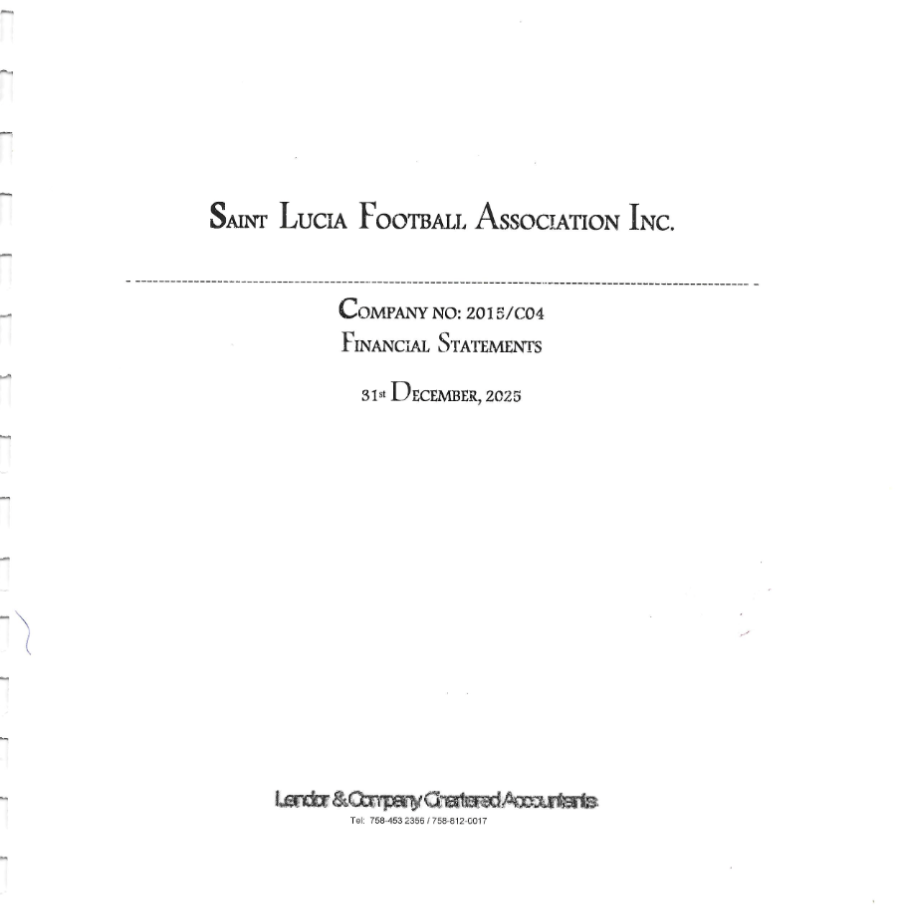
Saint Lucia football had more money in 2025 than the year before. A lot more. The SLFA's audited accounts show revenue of EC$7.19 million, up from EC$5.34 million, and the independent auditor signed them off as a fair picture of the Association's finances.
Then you look at where the money came from.
| Source | 2025 revenue | Share |
|---|---|---|
| FIFA | EC$5.36m | 74.5% |
| Concacaf | EC$1.05m | 14.6% |
| Caribbean Football Union | EC$18,817 | 0.3% |
| FIFA, Concacaf and CFU combined | EC$6.43m | 89.4% |
| Sponsorship and contributions | EC$148,000 | 2.1% |
| Total revenue | EC$7.19m | 100% |
Nearly nine dollars in every ten came from football's governing bodies. Local sponsorship brought in about two cents.
That isn't a scandal. Development money is supposed to be spent, and Saint Lucia is entitled to it. But it tells you exactly how the game here is paid for right now.
The Money Is Reaching the Pitch
Here's the part that deserves credit. Spending rose sharply in 2025, and most of the increase went into football, not offices.
| Spending line | 2024 | 2025 |
|---|---|---|
| Men's football | about EC$946,000 | EC$3.18m |
| Women's football | about EC$76,000 | EC$1.24m |
| Technical department | EC$29,598 | EC$133,950 |
| Administrative and general | EC$2.34m | EC$1.95m |
Admin went down. Women's football went up more than sixteenfold. Whatever else you think of the SLFA, that is not the shape of a federation spending new money on itself.
The men's figure shows where the money goes. Roughly EC$1.02 million on travel, EC$930,000 in stipends and player assistance, EC$416,000 on rooms and accommodation. Women's football carried around EC$478,000 in travel on top of its own player, accommodation and tournament costs.
That is the island tax on Caribbean football. Every international fixture means flights, hotels, meals, visas and staff before anyone kicks a ball.
FIFA's Forward programme exists partly to cover exactly that. Under Forward 3.0, member associations can draw up to US$8 million over the 2023–26 cycle, with extra travel support for smaller associations. According to FIFA, that money has already helped pay for Saint Lucia's Technical Centre, the artificial pitch and floodlights, national-team preparation, and GPS tracking and video analysis.
FIFA doing the heavy lifting isn't evidence that anything has gone wrong. It's what the money is for.
Spending It, or Building With It?
The real question is what the money leaves behind.
Some of it only buys another year of football. A flight gets used once. Some of it builds things that keep paying back: a pitch that lasts a decade, coaches who go on to train hundreds of players, young players who move abroad, a domestic league people will pay to watch and sponsors will pay to be seen at.
Outside money can stay an annual drip. Or it can be invested so the game slowly earns more of its own.
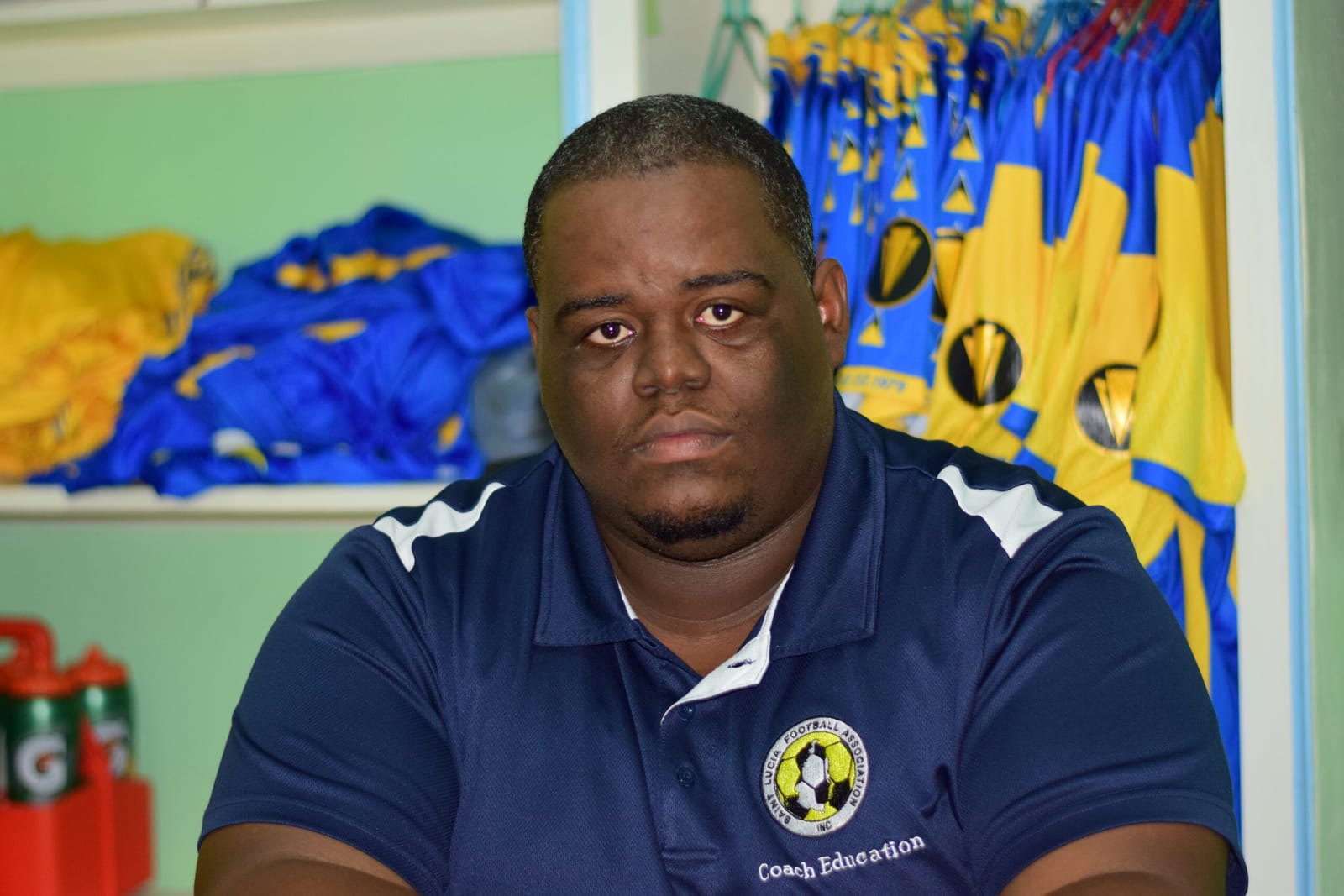
That is squarely the new Technical Director's territory. Miran Louis took charge after the period these accounts cover, so none of the 2025 numbers are his. But the priorities he has set out, grassroots structure, a bigger referee pool and better scouting, are exactly the long-term kind of spending this question is about. His department spent EC$133,950 in 2025, less than 2% of the SLFA's outgoings. What that line grows into, and what it produces, will be one of the clearest signs of whether the money is building something.
1.25 Million Views, EC$73,000
The Semi-Professional Football League is the early test.
Publicly reported figures show payments to players and technical staff rose from about EC$688,000 in 2024 to EC$1.45 million in 2025. SPFL content reportedly drew more than 1.25 million digital views in six months, with Tier 1 matches shown on YouTube and FIFA+.
Seven reported sponsors put in around EC$73,000 between them.
One caveat, clearly: the SPFL figures are not SLFA figures and shouldn't be added to the Association's accounts. The league's funding doesn't necessarily run through the SLFA's books.
But the contrast is hard to miss. Saint Lucia football is building an audience faster than it is making money from one.
That's normal for a league a few seasons old. You build the product before you can sell it. It does give everyone a scoreboard, though:
- Can views turn into sponsorship?
- Can online audiences become paying spectators?
- Can clubs build brands people recognise?
- Can matchdays sell hospitality, merchandise and advertising?
- Can local businesses see football as an investment rather than a donation?
None of those is the same question as whether there's enough money to run next season.
Saint Lucia Isn't the Outlier
Relying on football's governing bodies is a Caribbean pattern, not a Saint Lucian one. The accounts are from different years, in different currencies and in different formats, so compare the shares, not the totals.
| Federation | Year | From FIFA and Concacaf (plus CFU for SLFA) | From sponsorship and donations |
|---|---|---|---|
| Saint Lucia 🇱🇨 SLFA | 2025 | 89.4% | 2.1% |
| Guyana 🇬🇾 GFF | 2025 | 88.0% | 4.3% |
| Jamaica 🇯🇲 JFF | 2024 | 44.1% | 17.3%, plus 7.1% from gate receipts |
Guyana is the closest match. The GFF reported G$723.9 million of income in 2025, with G$539.4 million in FIFA grants and G$97.8 million from Concacaf. Donations and sponsorship brought in G$31.0 million. A much bigger country, almost the same funding profile.
Jamaica shows another model is possible. The JFF reported turnover of about J$1.236 billion in 2024, including J$213.3 million from sponsorship and donations and J$88.3 million in gate receipts. FIFA (J$371.1 million) and Concacaf (J$174.3 million) still matter a lot. So does the cost of turning up: roughly J$395 million went on travel and accommodation.
Even the CFU runs on the same economics. Its 2026 budget projects US$3.43 million of income, including US$1.25 million from FIFA Forward and US$1 million from a Club Shield subvention. Sponsorship and grants are budgeted at just US$100,000.
The interesting line is US$695,000 from television rights. Caribbean football has media value. The job is building the rest of the commercial game around it.
The Balance Sheet
The SLFA finished 2025 with about EC$1.60 million in cash. EC$1.13 million of that was restricted to specific programmes, including talent development, the headquarters refurbishment, Football for Schools, and national-team and women's development projects. That leaves roughly EC$478,000 unrestricted.
The Association ran a EC$439,204 deficit in 2025, after a EC$941,297 surplus the year before. Revenue rose about 35%. Spending rose by nearly three-quarters.
Given where that spending went, the deficit isn't proof of bad management. But one line in the accounts says a lot. When management assessed whether the SLFA would have enough cash for the next twelve months, it explicitly counted on expected funding from FIFA, Concacaf and other stakeholders.
The SLFA's model works, in part, because the international funding system keeps working.
What Success Should Look Like
The goal isn't to stop taking FIFA or Concacaf money. That would be daft. If the money is there, use it.
The better test is whether each funding cycle leaves the domestic game commercially stronger than the last one did. More spectators. More sponsors. Media rights worth more. Facilities that earn their keep. Stronger clubs. More merchandise. More young players moving into professional football, and more of the development income that can follow them when they do.
That's the difference between development funding paying the bills and development funding building an economy around the game.
The Question for Saint Lucia Football
The accounts tell us clearly where today's money comes from. They can't tell us where the SLFA, the SPFL and everyone else in Saint Lucia football want that balance to be in five or ten years.
So the question isn't why FIFA pays so much.
The question is what Saint Lucia football is building with it.
More money is now going into the game here. The next step is finding out whether the game can start earning more of its own.